

BLOG
The case for preventive silo maintenance
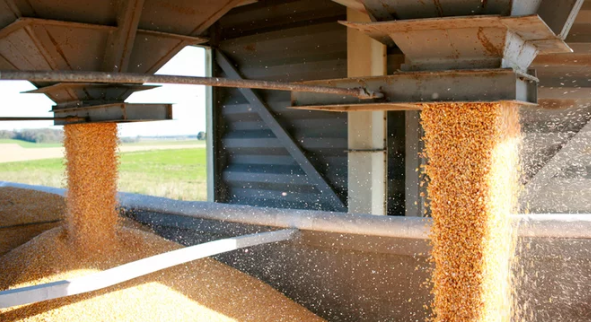
In the latter half of the last century, hundreds of freestanding concrete silos were built across South Africa. In the decades that followed, some of the specialised expertise required to construct and maintain them was gradually lost. Today, many of these silos are between 50 and 70 years old and are nearing, or in some cases exceeding, their intended lifespan.
The reality is that only a handful of experts in South Africa still possess the knowledge to build and maintain concrete silos. One of them is Carl Geldenhuys, director of Stugua Consulting (Pty) Ltd. Geldenhuys notes that in the United States, any concrete silo older than 40 to 50 years is deemed to have reached the end of its service life and must undergo a thorough structural assessment before continued use is permitted.
Cracks and structural stress
According to Geldenhuys, the biggest issue affecting older silos is the calcification of the concrete. Over time, this process weakens the material, leading to the formation of cracks and, in some cases, the detachment of sections of concrete. This exposes the underlying reinforcing steel. Once exposed, the steel begins to corrode, further undermining the structure’s strength. Moisture and salts accelerate this corrosion. As rust expands, it causes spalling which progressively erodes the silo’s structural integrity.
Cracking can also result from temperature fluctuations, foundation movement, or an inadequate concrete mix. If left unrepaired, these cracks allow moisture and pests to enter, compromising grain quality and the stability of the silo.
Groundwater challenges
Hardus Dupper, chief engineer at AFGRI Grain Management, echoes these concerns. He adds that older concrete silos also face persistent issues with groundwater management. “The original underground drainage systems have deteriorated over time. Unfortunately, the structural design of these older silos does not allow for those systems to be serviced or repaired.”
Expert maintenance combined with sufficient funding is the only viable solution for extending the lifespan of South Africa’s grain silos. “Once a structure is damaged beyond a certain point, restoring it to a safe, serviceable condition becomes extremely costly, difficult, or even impossible,” says Dupper. He stresses the importance of professional inspections and continuous monitoring to detect problems early.
Geldenhuys agrees, highlighting that regular inspections of the interior and exterior walls, the roof, and general silo maintenance – as outlined in Section 11.2 of the Construction Regulations, 2014 under the Occupational Health and Safety Act, 1993 (Act 85 of 1993) – are legally required but rarely fully implemented.
In terms of Section 11.2 an owner of a structure must ensure that (a) inspections of that structure are carried out periodically by competent persons in order to render the structure safe for continued use; (b) that the inspections contemplated in paragraph (a) are carried out at least once every six months for the first two years and thereafter annually; and (c) the structure is maintained in such a manner that it remains safe for continued use.
Strategic silo maintenance plan
Each silo complex should have a tailored maintenance plan, which can be benchmarked against other plans:
• Daily: Check ventilation, filters, and grain flow during loading/unloading.
• Monthly: Inspect for cracks, moisture, rust, and uneven flow.
• Semi-annually: Clean interior walls, test aeration pads and vibrators.
• Annually: Conduct structural inspection; repaint or reseal exterior surfaces.
Additionally, conducting a pressure test is a practical way to assess the air- and moisture-tightness of a silo.
Building regulations
According to Geldenhuys, South Africa has never had an internationally recognised design code for freestanding silos. He recalls that in the 1960s, the late Jock Henny, in collaboration with Noordwes Koöperasie and Christensen Construction in Lichtenburg, designed and built several silo tubes.
Henny developed a design code to guide their construction. He determined that silo tube walls cracking more than 1mm were considered ‘under-designed’, while those cracking less than 1mm were ‘over-designed’. This approach allowed him to establish an optimal balance, which ultimately became the basis for a practical design code.
Dupper notes that, while no codes are dedicated specifically to silo design, silos, like any other structure, must be designed by qualified professionals or teams in accordance with existing design codes and regulations. He emphasises that this does not grant unlimited design freedom; strict standards still apply, particularly for concrete and steel structures.
“There are also other regulations, such as construction regulations, that must be observed. The former South African Bureau of Standards (SABS) codes have been replaced with South African National Standards (SANS) codes, which are now integrated with other relevant standards. These must be considered when building silos,” he explains.
Concrete grain silos can remain functional for decades if properly designed, inspected, and maintained. The main risks of moisture, temperature fluctuations, cracks, and dust can be effectively managed through sound engineering, adequate ventilation, and skilled preventative maintenance.
Prioritising preventative maintenance over repairs is crucial for silo safety and for preserving grain quality during long- term storage. According to Dupper, old or damaged silo tubes can be repaired, but the costs often make such efforts economically unviable. As a result, owners frequently turn to alternative storage solutions, such as steel silos, grain bunkers, or silobags.
By Koos du Pisanie, Plaas Media
0 COMMENTS
LEAVE A COMMENT