

BLOG
South Africa’s grain silo history: A journey of profound heights and depths
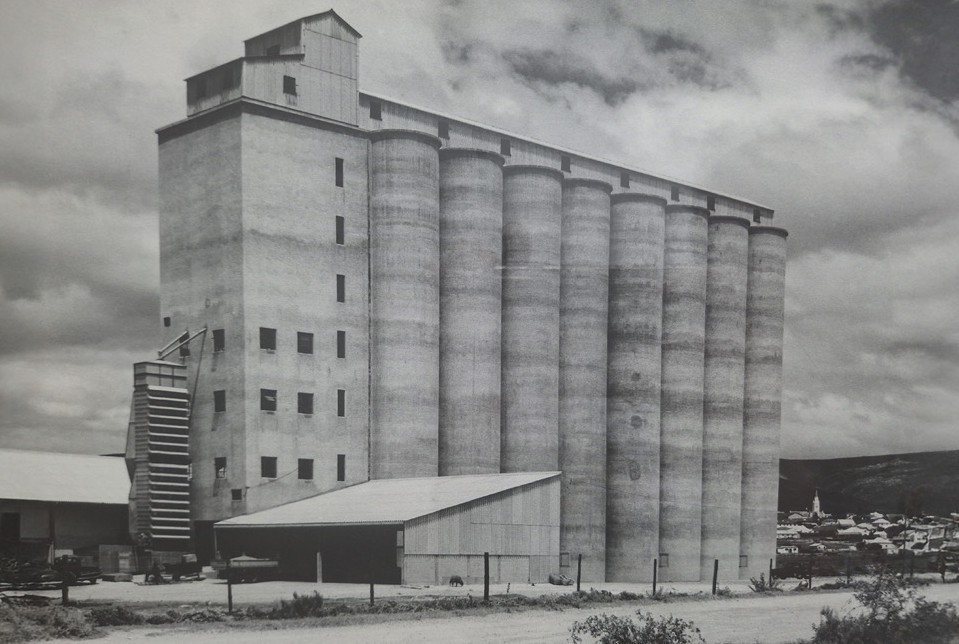
Grain storage has always been central to food security. From ancient methods designed to prevent spoilage to the massive silos that now dot South Africa’s landscape, the evolution of storage systems tells a story of innovation.
From bags to bulk
Following the Anglo-Boer War of 1899 to 1902, South Africa’s grain production was modest. Bulk handling systems had not yet been introduced, and grain was transported and stored in bags. At the beginning of the 20th century a few milling companies offered limited facilities for storing raw grain and flour. Due to production constraints and the lack of adequate storage infrastructure, the country relied heavily on imported grain, especially wheat.
The formation of the Union of South Africa in 1910 marked a turning point. Commercial agriculture began to expand, with a notable surge in grain production, especially maize. Until the 1940s, however, grain continued to be packed in bag stacks, typically covered with large tarpaulins for protection.
Towards modernisation
After World War II, grain production in South Africa grew rapidly, especially in the western regions. Yet, the shortage and high cost of hessian grain bags exposed the inefficiencies of the bagged storage system. This challenge underscored the need for silos that could enable bulk handling, greater control and flexibility, and limit losses caused by weather, poor temperature control, spoilage, and pests. Recognising this need, the South African government initiated the development of a national network of large, centralised storage facilities. The first step was the construction of port and inland grain elevators, designed to modernise grain handling and transition the industry from bags to bulk systems.
Completed in 1924, the Cape Town and Durban port grain elevators were the country’s first major grain-handling structures, built under the direction of the South African Railways and Harbours (SAR&H), bearing in mind the opportunities it would create for exporting grain to other markets.
Institutional foundations
The establishment of the Maize Board and Wheat Board in the 1930s under the Marketing Act, 1937 (Act 26 of 1937), further formalised the grain industry. These boards oversaw grain production and marketing in the country, purchasing grain from producers at predetermined prices.
Cooperatives with silo infrastructure were compensated for storage and handling services, acting as intermediaries between producers and the marketing boards. They received grain from producers, stored it securely, and dispatched it according to the boards’ instructions to millers and other end users. Prompted by producers, traders and government, the construction of grain silos increased significantly during the late 1940s and early 1950s. In 1952, the government introduced a long-term loan scheme – initially valued at R10 million – administered through the Land and Agricultural Development Bank of South Africa (Land Bank).
The scheme provided financial support to cooperatives, millers (including private millers), traders, and entrepreneurs for the construction of grain silos and bulk storage facilities. The implementation of the scheme and approval of silo construction permits were managed by the Grain Silo Committee, comprising representatives of the Department.
It replaced the Marketing Act, 1968 (Act 59 of 1968), effectively deregulating the sector and allowing the market forces of supply and demand (free-market system) to determine prices. The change marked the end of marketing schemes and boards.
The free-market system
By the early 2000s, Spoornet’s rail services had begun to deteriorate, posing serious challenges for agricultural companies that had strategically built silos near railway lines for efficient grain transport. As rail infrastructure declined, many businesses were forced to invest heavily in upgrading their outloading systems to accommodate road transport, significantly increasing logistical costs.
The dissolution of the Maize Board in 1994 and the Wheat Board in 1995 signalled the end of the control board era. The Co-operatives Act, 2005 (Act 14 of 2005), which governed boards and cooperatives, also came to an end, and most agricultural cooperatives became Agricultural Economics and Marketing, the Maize Board, Wheat Board, Sorghum Board, and Oilseeds Board.
The quality question
Individual grain cooperatives across the country applied to the Land Bank for subsidised loans to construct silos, investing substantial sums as long-term assets for their members. In doing so, they accepted the risk of low returns on investment while contributing to post- World War II job creation through the establishment of widespread operational silos requiring a local workforce.
The silo infrastructure programme expanded rapidly after the 1960s, paving the way for technological advancements such as in-silo and in-bin drying methods, including aeration, which is an essential storage management technique to preserve grain quality and minimise spoilage caused by insects and microbial activity.
Under the Road Transportation Act, 1977 (Act 74 of 1977), road transport services required permits, creating logistical challenges. To address this, the South African Railways constructed grain silos along major railway lines to facilitate bulk handling and export. These facilities became known within the grain industry as ‘B-silos’. The national railway system operated efficiently at the time. The silo design enabled producers to deliver grain directly to it, from where it was transported mostly by rail to millers.
Rolling with the punches
Between the 1950s and 1990s, South Africa made significant progress in developing grain storage techniques. These included advances in pest and rodent prevention, temperature and humidity control, moisture management, and silo cleaning practices.
In the early 1980s, the Maize Board, Wheat Board, and government introduced a land conversion scheme aimed at converting marginal maize fields in the western parts of the country into grazing for livestock. Although this scheme reduced the total area planted to maize, yield improvements largely offset the decline in hectares, keeping total production stable. In many towns across these regions, such as Vryburg and Kameel, large concrete silos became redundant as a result of the land conversion scheme. Meanwhile, in areas such as Mpumalanga, rising yields led to the adoption of bunker storage and silobags as practical alternatives to constructing new silos.
The liberalisation of South Africa’s grain market began with the Marketing of Agricultural Products Act, 1996 (Act 47 of 1996), which came into effect in 1997. private companies. Under this free- market system, agricultural businesses and millers now had to buy and store their own grain.
Following deregulation, the South African Futures Exchange (Safex) was established to provide a transparent commodity trading platform where grain prices are determined by supply and demand. Safex introduced futures contracts for grains, providing a mechanism for price discovery and risk management for producers and traders, which became the benchmark for spot market prices.
Today, operating as the JSE Commodity Derivatives Market, Safex does not store grain itself but provides a regulated platform for trading standardised contracts, which represent physical grain stored in JSE-registered silos. This system allows for the hedging of price risk, price transparency, and improved liquidity by enabling participants to buy and sell grain supported by good collateral management of the underlying commodity indicated on the silo receipt.
Irrigation areas used to rely solely on flood irrigation, where fields were watered manually. The 1980s marked a turning point when South Africa began importing centre-pivot systems from the United States. This increased grain production under irrigation, especially along the Orange and Vaal Rivers. As production expanded, the demand for silos grew, prompting cooperatives to construct silos even after Land Bank loans were no longer subsidised.
The shift from small-scale to high-volume systems, combined with advances in grain storage techniques between the 1950s and 90s, paved the way for modern in-silo and bin drying practices. In 1994, South Africa introduced large-scale continuous tower dryers (tall, vertical systems designed to remove moisture efficiently) for commercial operations. Although these early dryers had relatively low capacity, technological advancements have since led to the adoption of high- capacity dryers from Europe for enhanced moisture control.
Grain drying is energy-intensive, requiring gas, diesel, or electricity, but it is a worthwhile investment. Wet grain can only be stored briefly, while properly dried grain can be stored for extended periods. Many silos in the eastern Free State and eastern Gauteng now use artificial dryers and aeration systems to ensure uniform moisture levels.
Ideally, grain should dry naturally in the field until it reaches an acceptable moisture level before harvest. However, to take advantage of early market opportunities, some producers harvest ahead of schedule.
Current situation
With regard to permanent and bulk grain storage, new silos continue to be built, often adjacent to mills. Concrete silos remain the most durable long-term solution in South Africa, typically ranging in capacity from 40 000 to 200 000 tonnes. These structures are designed and constructed by specialist companies in accordance with strict engineering standards, and a structural engineering certificate can be issued upon completion if required.
Modern agricultural and industrial operations also make use of steel silos, South African Railways constructed so-called B-silos along major railway lines to facilitate bulk handling and export. bunkers, and silobags. Because of the high cost of concrete silos, an alternative silobag system, developed in Argentina and Brazil, was introduced to South Africa in the early 2000s.
Around the same time, many agricultural businesses began using bunker storage, where grain is stored on sloped, tarpaulin-lined ground and covered with additional sheeting. Today, concrete silos remain the preferred option for long-term grain storage, while bunkers and silobags provide additional capacity during surplus years or in areas where yield have increase and additional capacity is needed at existing sites.
By Carin Venter, Plaas Media
For more information, contact Tom Meintjes, former managing director of GWK, at 082 377 4277
0 COMMENTS
LEAVE A COMMENT