

BLOG
Grain storage options abound
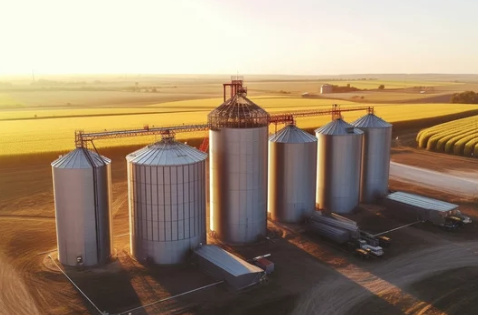
Each year, as harvesters sweep across the fields and trucks queue at depots, the same question arises: Where will all this grain go? For decades, the answer was straightforward – into silos. Those towering landmarks across the countryside have long symbolised both food security and commercial stability.
But times have changed. Advances in technology, coupled with changes in ownership structures, production systems, logistics, and financing, have prompted the industry to rethink its approach. Today, a variety of alternatives – from polyethylene grain bags to bulk bunkers and even ‘grain dams’ – are available. Each option offers advantages, economic considerations, and potential drawbacks.
Silos: The benchmark Traditional tower silos remain the benchmark for grain storage. Constructed from concrete or corrugated steel, they can last for decades with proper maintenance and provide excellent control over temperature, aeration, and pest management.
Operational costs for silos are generally competitive when compared with other storage methods. However, their high initial capital investment means that they make the most sense for those taking a long-term view of grain storage.
Grain bags: The ‘bomb squad’ Silobags can be considered the ‘bomb squad’ of the grain handling and storage industry, especially during seasons of surplus when extra storage capacity is needed. They also provide flexible solutions for segregating grain with specific characteristics or unique market requirements.
These long, white polyethylene tubes of roughly 60m long and 3m wide can each hold approximately 180 tonnes of grain. The capital costs of silobag systems are generally lower than those of traditional silos and cover the purchase of tractors, chaser bins, a bagger, and an extractor. Some silobag depots also include small holding bins, which add to the capital outlay.
However, because the bags are replaced annually, operational costs tend to be higher than those associated with silos.
Bunkers: Bulk storage at scale First introduced in Australia and later adopted in South Africa, bunker systems have become a key component of the country’s grain storage landscape. Their appeal lies in lower initial capital costs compared to silos, possibility of relocation, and reduced operational expenses. Bunker depots also provide high inloading and outloading capacity, which is an important advantage as on-farm harvest volumes rise.
Grain dams: The emergency option A grain dam consists of a steel or wire structure covered with plastic sheeting. While it can be used for medium- to long-term grain storage, its main purpose is to enhance logistics efficiency by providing additional buffer capacity when needed. Grain dams require relatively low initial capital investment compared to other storage methods, but their operational costs are a disadvantage over the medium or long term. The future of storage solutions Innovation in grain storage management is rapidly accelerating. Remote sensors now enable continuous monitoring of temperature, humidity, and carbon dioxide levels within sealed structures and bags. Early warning alerts help prevent spoilage before it becomes visible, while AI-driven analytics are beginning to optimise aeration and fumigation schedules, reducing energy consumption and chemical use.
Manufacturers are also exploring
UV-stabilised and recyclable films, and solar-powered fans are increasingly integrated into small steel silos and bunker systems. Energy reliability and cost remain challenges in South Africa and such low-power, intelligent technologies could transform grain storage practices. The shift is underway from static to responsive systems: facilities that sense, adapt, and communicate.
Environmental concerns are also driving interest in biodegradable bag materials and the recycling of bunker liners. The next generation of storage solutions will merge digital precision with sustainability goals.
Distinct purposes
Each storage method serves a distinct role. Grain dams provide buffer capacity, silobags accommodate surplus during bumper harvests, bunkers extend capacity alongside silos at existing depots, and silos ensure cost-effective and safe storage over the long term.
Ultimately, sound management practices remain the cornerstone of safe handling and storage – from accurate grading and site hygiene to rodent control, regular inspections, and effective fumigation. These measures are an essential part of maintaining grain quality, supporting food security and contributing to economic growth and stability in rural area.
By Izak Hofmeyr, Plaas Media
0 COMMENTS
LEAVE A COMMENT