

BLOG
Grain handling: A story spanning 60 years
It was June 1960, and the maize was ready for harvest. Maize pickers were recruited from surrounding areas, reaching as far as the former homelands of Lebowa and KwaNdebele. Early each morning, while frost still blanketed the fields, the pickers began their work – each with a grain sack in hand, gathering the maize cobs one by one. Once filled, the sacks were loaded by hand onto wagons and taken to the threshing floor.
A Nigel 21 threshing machine stood waiting to separate the grain from the stalks and husks. It was powered by a McCormick Farmall tractor, using a belt and pulley system to drive the machine’s internal mechanism (the threshing cylinder). The tractor operator manually fed each full sack into the machine, where the maize was processed. The stalks emerged on one side, later used as fuel for the stoves in our home. The husks were blown into a heap, creating a wonderful playground for us children, while the leaves became winter feed for the cattle. Once the maize had been threshed it fell into grain sacks, each of which was weighed and sewn shut with thick thread using a long needle. Every sack had to weigh exactly 202 pounds (91,6kg), comprising 200 pounds of maize and two pounds for the sack itself.
The filled sacks were then loaded by hand onto a trailer or six-tonne truck and transported to the local cooperative. There, the sacks were counted to confirm the load’s total weight and stacked neatly into pyramidshaped piles, which were then covered with tarpaulins. This was what grain handling looked like in those early days, long before the era of modern grain silos. Rise of a new landmark I still remember what an extraordinary event it was when the Eloff silos were built by the Delmas Cooperative alongside the railway line in Eloff. A grand celebration was held to mark this event. Because the soil around Delmas contains large amounts of dolomite, which is considered unstable for heavy structures, it was unsuitable for building silos of this size. As a result, the project was undertaken nearly 12km from town. At the time, around 90% of South Africa’s grain was transported by rail, which explains why so many silos were constructed along railway lines. Grain was delivered to these silos for storage, sometimes for months, before being loaded into special rail cars for transport to millers, animal feed manufacturers, and export harbours across the country.
This point in time
Today, when we look at South Africa’s grain industry and its modern storage infrastructure, we have every reason to be proud of how far we’ve come. The contributions of industry organisations and the role of Agbiz Grain as a platform, voice, and facilitator cannot be overstated. Thanks to their collective efforts, our country has the capacity to store nearly 20 million tonnes of grain and oilseeds this year, cementing South Africa’s position as the food basket of sub Saharan Africa.
My hope is that Agbiz Grain will continue to build on this strong foundation for generations to come.
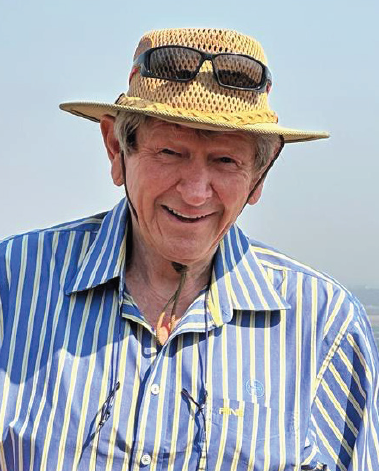
Kallie Schoeman was born on 18 May 1954 and matriculated from Delmas High School in 1971. Since 1978, he has expanded the Schoeman family enterprise to more than ten times its original size. This remarkable growth was driven by the consolidation of crop and livestock operations, as well as the establishment of new ventures, including pecan nut production in the Northern Cape, the management of grain handling facilities in Delmas, and the development of the Agron fertiliser plant, now known as Trifert.
For more information, send him an email at kallie@witklip.co.za
By Kallie Schoeman, agripreneur
0 COMMENTS
LEAVE A COMMENT