

BLOG
Genset project boosts operational capacity at Cape Town Port Container Terminal
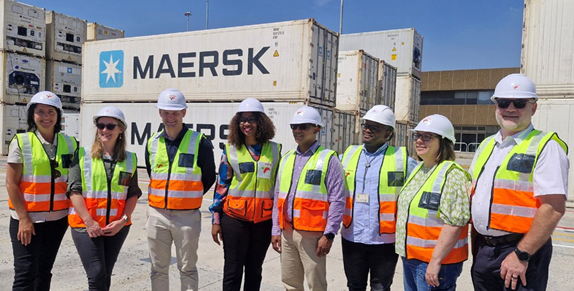
The Cape Town Genset project involved installing mobile, high-capacity diesel generators (gensets) and additional reefer container plug points to prevent cold-chain disruptions due to power failures, and strong wind conditions.
The majority of South Africa’s fresh fruit is handled and exported through the Port of Cape Town; however, the Mother City is notorious for gale force winds and associated power disruptions, which can halt the loading of refrigerated fruit containers.
These containers require a continuous supply of electricity to maintain their temperature and prevent fruit from spoiling. The port, however, has a limited number of plug points available
to power containers awaiting loading. When disruptions persist, these plug points are quickly exhausted, forcing incoming containers to be diverted either to alternative ports or to private cold storage facilities. Both options come at a great cost.
To mitigate this risk, Agbiz launched the Cape Town Genset pilot project in collaboration with industry stakeholders and Transnet. The initiative increased temporary plug-point capacity by renting two 500kVA generators, which supplied power to an additional 120 plug points from mid-December 2025 to mid-March 2026.
Agbiz recently invited interested parties on a Transnet-hosted tour of the port to assess the project’s impact during the current season.
Boosting operational capacity
The container terminal’s generators were operational for only 43% of the required time during the 2024/25 peak deciduous fruit export season. The situation improved during the 2025/26 peak
export season with the introduction of the Cape Town Genset project, a collaborative public-private partnership that increased generator capacity at the terminal.
While Transnet covered the generators’ operating costs, voluntary contributions funded the generator rental, control boards and additional plug points. Contributors included the Western Cape provincial government, the Fresh Produce Exporters’ Forum (FPEF), Hortgro, the South African Table Grape Industry
(SATI), the KAL Group (Agrimark), and Santam.
“The additional cost is outweighed by the potential losses that would have occurred without the added buffer capacity,” says Theo Boshoff, CEO of Agbiz. “Had we continued without the generators, potential losses could have amounted to at least R3 million. Based on the utilisation rate of the generators and the number of additional reefer containers accommodated instead of being diverted, we will soon be able to quantify the project’s impact on the industry.”
Boshoff adds that collaboration between the industry and Transnet has improved dramatically compared to previous years. “Although the Cape Town Genset-project is considered a relatively small project and not yet fully sustainable due to its reliance on donations, I believe we are definitely heading in the right direction. With a cooperation agreement now in place, I am confident that we can work together on larger, more sustainable projects in the future.
By Carin Venter, Plaas Media
0 COMMENTS
LEAVE A COMMENT