

BLOG
A challenging year for grain and oilseeds
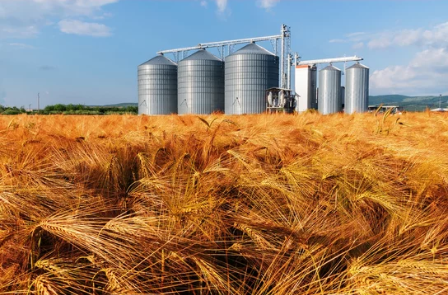
It has been a turbulent year for South Africa’s grain and oilseeds industry, traders included. Misaligned crop estimates, local quality concerns, frustrations with the Johannesburg Stock Exchange (JSE), and the ripple effects of the United States (US) president Donald Trump’s trade tariffs on global markets were among the many challenges the sector faced in 2025.
These issues were unpacked by Dr Konrad Keyser, chairperson of the South African Cereals and Oilseeds Trade Association (Sacota), during the association’s annual general meeting, held on 18 September at the Centurion Residential Estate and Country Club in Pretoria.
Membership and representation Sacota currently represents 34 members, broadly divided into three categories:
• International traders with offices in South Africa.
• Local traders, many of whom now operate across borders.
• Associate members such as financial institutions that provide services to grain traders.
New members that joined during the previous financial year include Chester Africa (international), Perdigon (local), and associate members Steinweg Bridge and Land Bank. Since 1 July this year, Invictus Trading and Nu-Pro Commodities have also come on board.
Dr Keyser stated that broadening representation within the trading community remains a key priority for Sacota. The organisation remains focussed on expanding its membership.
Estimate and quality concerns
One of the toughest aspects this year was grappling with crop estimates that turned out to be far off the mark. “Whether we looked at the official Crop Estimates Committee (CEC) figures or our own projections, we were all caught off guard,” Dr Keyser admitted. “We still don’t quite understand what went wrong.”
The soya bean and maize harvests ended up significantly larger than most forecasts anticipated. While this initially appeared positive, subsequent quality issues – particularly in white maize – quickly tempered expectations. Early-season drought conditions were followed by excessive late rains, which affected grain size and overall consistency, especially in white maize.
Only 64% of this year’s white maize met Grade 1 quality standards, a figure Dr Keyser described as “probably the lowest on record”. International buyers also raised concerns regarding quality, particularly regarding yellow maize exports to the Far East. “This has been a shock to our system,” he said.
Between May and August, South Africa exported just over 200 000 tonnes of maize via deep-sea channels – four shipments of yellow maize and two of white maize. Yet by August, imports totalling roughly 78 000 tonnes had already begun arriving in the Cape. “Interestingly, the imported yellow maize was at least equal in quality, if not better, than our domestic crop,” Dr Keyser noted. “We were in the unusual situation of exporting and importing almost simultaneously.”
Wheat under pressure
South Africa’s wheat production remains barely sufficient to meet half the local demand. “Africa is heavily dependent on wheat imports, and that dependence is expected to keep growing,” Dr Keyser explained, referencing data presented at the International Grains Council meeting.
Domestically, wheat is becoming increasingly uncompetitive compared to summer crops such as maize and soya bean. In the Western Cape, many producers are switching to canola, while in the northern regions, wheat margins simply no longer justify production. “The local wheat industry is struggling to survive. We will likely have to import more in the years ahead.”
Ongoing frustration with the JSE
Dr Keyser’s most pointed remarks were directed at the JSE’s Commodities Division. “Working with the JSE on new initiatives has been disappointing. We’ve been requesting a Commitment of Traders (CoT) report since 2010, which is standard practice in other developed markets. All we’ve received are explanations of why it supposedly cannot be done.”
With algorithmic and institutional trading now dominating market activity, Dr Keyser argued that greater transparency is long overdue. “This is 2025. The markets have evolved. We need this data to function effectively.”
Sacota also engaged with the JSE on developing a basis futures contract that would enable targeted trading at silo level. However, the project was suspended due to alleged anti-competitive concerns. “We’re now exploring alternative ways to make this product a reality.”
Transnet’s partial deregulation Another key development has been the partial deregulation of Transnet’s rail operations. Under the new structure, Transnet will retain ownership of core infrastructure through the newly established Transnet Rail Infrastructure Manager (TRIM), while private operators will be permitted to manage selected routes. The rail network has been divided into A-lines (strategic routes such as Durban and Saldanha) and B-lines (branch routes feeding into the main network).
“The issue,” Dr Keyser explained, “is that the B-lines are being neglected. Without them, it is impossible to move grain efficiently from production areas to the ports.”
To address this, Sacota and its members are developing a proposal for the cooperative management of these feeder lines to ensure export logistics remain viable. “TRIM is waiting for us to come back with a practical plan.”
Strengthening partnerships Despite these challenges, Sacota’s relationships, both locally and internationally, have strengthened significantly over the past year.
The association remains an active member of the International Grain Trade
Coalition (IGTC) alongside counterparts from Argentina, Brazil, the US, Canada, Europe, Ukraine, and Australia. “These global connections are invaluable,” said Dr Keyser. “They allow us to share data, anticipate policy changes, and align on phytosanitary and trade matters.”
Back home, Sacota has made notable progress in rebuilding trust with the National Department of Agriculture (NDA). “It is almost impossible to trade, whether locally or abroad, without departmental support. Over the past year, our collaboration has improved markedly.”
He noted the department’s assistance with silo certification, laboratory testing, and the synchronisation of GMO imports, which are all critical steps that helped South Africa maintain compliance during the 2024/25 season.
Digitalisation has also been a key focus. The association is actively promoting the ePhyto and eCert systems. These are online platforms introduced by the NDA to streamline applications for phytosanitary export and import permits.
Sacota is collaborating with the developers of these systems to further simplify trade procedures such as applications, particularly for key markets such as China and Indonesia.
Looking ahead
While 2025 has been marked by volatility and frustration, Dr Keyser remains cautiously optimistic. “The year tested us on every front, from logistics and market accuracy to quality and policy. But it also strengthened Sacota’s networks and reminded us of the industry’s resilience.
“Our members are problem solvers by nature. If we can maintain strong collaboration between traders, government and logistics partners, we’ll be ready for whatever 2026 brings.”
By Susan Marais, Plaas Media
For more information, send
an email to info@sacota.co.za
0 COMMENTS
LEAVE A COMMENT