

Articles & Insights
Thriving at export parity: The strategic imperative for grain
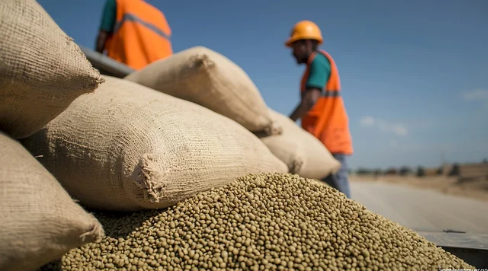
South African grain producers are facing a fundamental shift: Efficiencies in production are outpacing what the local market can absorb. What was once a question of growth has become a question of direction – where profitability and survival will depend on how effectively the sector competes beyond its borders.
This reflects a deeper shift in the balance between production capacity and domestic demand. As yields improve and production expands, the question is no longer whether South Africa will export grain, but how effectively it can compete in global markets.
The OECD or Organisation for Economic Cooperation and Development, and the Food and Agriculture Organization of the United Nations’ (FAO) Agricultural Outlook 2025-2034 highlights that, while global grain demand will continue to grow, much of this growth will be concentrated outside traditional high-income markets. Growth is shifting towards emerging economies, driven by population expansion, urbanisation, and changing diets.
At the same time, real price growth is expected to remain subdued due to productivity gains and supply expansion in major exporting regions. In the short to medium term, global markets will remain competitive, with tight margins. In this context, South African grain producers face a new strategic imperative: to thrive at export parity.
Shift towards animal protein Grain demand is more complex than population growth alone. Consumption patterns shift as economies develop and incomes rise. Diets evolve from predominantly plant-based staples, such as grains, sugars, and oils, to include more animal-based protein, such as meat, dairy, seafood, and eggs.
This brings the concept of feed conversion ratio (FCR) into focus. Producing animal protein requires significantly more grain than direct human consumption and represents a significant opportunity for grain producers as future grain demand will increasingly be driven by livestock and poultry production. The question is not just how much grain is produced, but how it is used to create higher-value outputs. Poultry, for example, is among the most efficient converters of grain into protein, yet still requires several kg of feed per kg of meat produced.
This dynamic highlights a key opportunity for grain value chains: future grain demand will be driven by livestock and poultry production in fast-growing economies. However, South Africa is not currently positioned as a high- growth consumption market. Economic growth remains constrained, and while population growth continues, it is insufficient to absorb the expansion of domestic grain production.
The domestic market alone will not carry the sector forward. The focus must therefore shift towards building the capability to compete internationally.
Exporting bulk grain presents inherent challenges. Grain is a low-value, high-volume commodity, and transporting it over long distances is costly and dependent on efficient logistics systems. South Africa’s constraints in rail performance, port efficiency, and handling capacity are well documented. Although there are encouraging signs of improvement in some corridors, these remain binding constraints on competitiveness.
Given these challenges, a more resilient pathway lies in moving up the value chain – converting grain into higher-value products such as animal protein (poultry, eggs, dairy, beef and mutton). South Africa’s poultry sector, in particular, has achieved notable productivity gains over time, including improved FCRs, faster growth to slaughter weight, and increased operational efficiency.
These gains reflect sustained investment, technological adoption, and industry coordination. They also represent a significant opportunity for the South African grain and livestock complex.
Every tonne of grain exported as protein carries greater value, supports more jobs, and boosts economic resilience compared to bulk grain exports. Whether exporting grain or protein, success ultimately depends on global cost competitiveness. Productivity lies at the core of the sector’s ability not only to survive, but to thrive.
The role of logistics
Even with strong on-farm productivity, export competitiveness can easily be undermined by inefficiencies beyond the farm gate, eroding margins and limiting South Africa’s ability to compete globally.
Rail, ports, storage, and handling systems ultimately determine whether producers can realise export parity pricing. Without improvement in these systems, gains in on-farm productivity risk being neutralised. While early signs of reform and investment are encouraging, the scale and urgency of improvement required remain substantial.
Working on a niche strategy
South Africa is a relatively small player in global grain markets. Competing purely on scale against major producers such as Brazil and the United States will always be challenging. This reality creates both a constraint and an opportunity to:
• Compete on efficiency in bulk markets where viable.
• Develop niche, high-value segments where differentiation is possible.
Potential niche opportunities include identity-preserved grains, non-GMO segments, high-oil or specialised oilseed varieties, and legumes and alternative protein crops. Niche strategies cannot replace bulk production, but they can expand margins and reduce exposure to global price pressures.
Competing where the price is set The reality facing South African grain producers is that prices will continue to be determined in global markets as we expand production beyond domestic demand. Thriving in this environment requires not only resilience but deliberate, sustained competitiveness.
This demands a focus on:
• Lower cost structures.
• Higher productivity.
• Efficient logistics.
• Strategic value addition.
• Targeted market positioning.
The outlook is not without opportunity. Global demand will continue to grow, particularly in regions aligned with South Africa’s geographic and logistical reach. However, capturing this opportunity will depend on the decisions made today – on farms, across value chains, and within the policy environment. South Africa must do more than participate in global markets. It must build the capability to compete and thrive within them.
By Dr Tobias Doyer, Grain SA