

Articles & Insights
Agbiz gears up for a year of unity
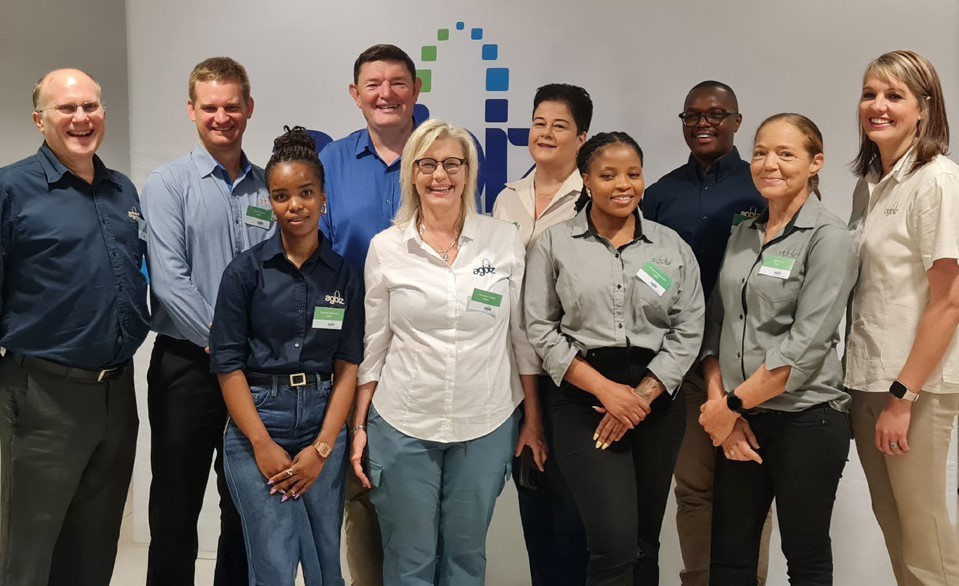
Cooperation will be the unifying key to unlocking success in the grain value chain in 2026. This message was conveyed loud and clear at the annual Agbiz Media Day, held at the Grain Building in Pretoria in December last year.
Logistics, legislation, and value chain functionality will all come under scrutiny, and collaboration within the value chain and with other stakeholders will determine whether the storage sector thrives or fails in a year that promises another bountiful grain and oilseed harvest.
Policy landscape and progress Agbiz CEO Theo Boshoff reflected on the policy landscape that affected South African agriculture in 2025, noting that the year began with significant disruption driven by misinformation and unexpected policy shocks. These included the signing of the Expropriation Act, 2024 (Act 13 of 2024), activist pressure on crop protection products, the publication of employment equity targets without adequate consultation, and president Donald Trump’s announcement of American ‘liberation day’ tariffs, which unsettled international trade relations. Despite these challenges, Boshoff pointed to encouraging signs of economic recovery, or so-called ‘green shoots’. Significant progress was made in logistics reform, most notably the court-approved public-private joint venture at Durban’s Pier 2 container terminal and equipment upgrades at the Port of Cape Town. “The equipment was purchased some time ago, but only installed in 2025,” Boshoff said. While natural elements such as wind remain a stumbling block, the elimination of other obstacles deserves recognition.
He also highlighted the success of the Genset public-private partnership, which delivered two 500kVA generators and 120 additional reefer plug points at the Cape Town Container Terminal. “The project cost R1,4 million but saved the industry at least R3 million, a clear demonstration of effective collaboration.” Rail reform progressed institutionally, with a finalised network statement enabling private-sector access, Competition Commission approval for collaboration, and the prospect of private operators entering key corridors. Attention is now shifting to the future of underutilised rural branch lines, many of which Transnet no longer intends to maintain.
On the trade front, global realignment triggered by United States (US) tariffs has accelerated diversification efforts. While negotiations with the US continue and some agricultural products have been exempted from tariffs, industry stakeholders are pressing for broader relief, Boshoff said. Through the National Economic Development and Labour Council (Nedlac), business and agriculture have identified Japan, South Korea, Southeast Asia, and Gulf countries as priority markets, while urging caution in dealings with China and India.
Other positive developments in 2025 included extended periods without load shedding, progress on a foot-and- mouth disease (FMD) vaccine strategy and agriculture-related master plans, withdrawal of potentially harmful legislation, and a renewed focus on local government reform and rural infrastructure. Looking ahead, the sector will closely monitor the practical application of expropriation legislation, rail concessions, trade diversification, the rollout of FMD vaccines, and regulatory reform.
Key priorities for the grain sector
Dr Charl van der Merwe, general manager of Agbiz Grain, stressed that the grain industry’s strong structures, which include commodity trusts, industry bodies, and research organisations, remain a major asset for South Africa. Agbiz Grain focusses on policy and regulation regarding grain handling and storage within the broader grain industry. The 12 businesses that are members of Agbiz Grain collectively own and operate 98% of the grain storage capacity registered and accredited by the Johannesburg Stock Exchange.
Dr Van der Merwe added that price and production risks will remain a major concern for the grain industry in 2026. He noted that rainfall variability continues to pose a significant production risk, and aspects such as conservation agriculture, precision farming, and the adoption of new technological advancements (e.g., new breeding techniques and artificial intelligence) are expected to play an increasingly important role.
Looking ahead to 2026, the sector faces critical issues such as price volatility, increased chemical regulation, infrastructure challenges, and the profitability of the wheat value chain that is the subject of a section 7 investigation by the National Agricultural Marketing Council.
Agbiz Grain’s priority projects for 2026 include developing a grain storage audit standard, actively engaging in rail branch line revitalisation, strengthening food safety protocols, combating organised grain fraud, and improving emergency preparedness through potential private-sector support.
Training is a key priority for Agbiz Grain. The first group of students in the Grain Depot Manager programme will complete the two-year programme in 2026. The fumigation programme will also be finalised this year, and development of the silo operators programme will commence.
Roads, rail, and other infrastructure will continue to be critical factors in the year ahead, while the role of local government in supporting a successful production environment cannot be underestimated.
Regulatory changes in the pipeline Annelize Crosby, head of legal intelligence at Agbiz, highlighted several potential legislative developments that remain uncertain, such as the Firearms Amendment Bill, carbon emission targets, and sectoral budget allocations. She pointed out three major pieces of legislation that the industry must monitor closely in 2026: the Ekurhuleni expropriation test case, potential amendments to agrochemical legislation, and changes to the National Water Act, 1998 (Act 36 of 1998).
Crosby said expropriation will continue to be a contentious issue in the year ahead. “While the failed attempt to amend section 25 of the Constitution and the signing of the Expropriation Act brought temporary calm, new
developments suggest the debate is far from over,” she cautioned. A private member’s bill has once again been tabled in parliament, seeking to abolish private property rights and compensation altogether. Although its prospects of success are slim under the current parliamentary composition, the move underscores the political appetite that still exists in South Africa for altering property rights.
A critical test case is the Ekurhuleni expropriation matter, where land was seized without compensation for housing purposes. “The municipality openly stated its intention to test the constitutional limits of expropriation,” Crosby explained. The case is expected to proceed to court in early 2026 and will be closely watched for its implications relating to compensation standards.
Meanwhile, court challenges are underway to have parts of the Expropriation Act declared unconstitutional. Government has already conceded that section 19, which deals with disputes over the timing of compensation, is likely unconstitutional. In addition, proposed equitable access to land, though not yet tabled, may introduce new rules on land redistribution and possible land ceilings. Another contentious legal issue Crosby will be monitoring closely in 2026 is the regulation of agricultural remedies, particularly agrochemicals. South Africa continues to rely on outdated legislation dating back to 1947 to govern this critical sector. Concerns raised by non-governmental organisations and the Human Rights Commission about the safety of these chemicals have prompted parliamentary engagement – often without adequate consultation with the agricultural sector.
While this debate is global and not unique to South Africa, it has become especially pressing locally. Crosby also noted the importance of heeding industry warnings against misconceptions that food security can be sustained without agrochemicals or through an immediate shift to biological alternatives. A rapid ban, without viable and affordable substitutes, could trigger serious unintended consequences for food production.
Government is expected to launch a comprehensive consultation process in 2026 to draft new legislation. In the meantime, the announced ban has underscored mounting regulatory pressure in this space.
Water issues
Another major issue facing the industry in the coming year is the proposed amendment of the National Water Act, which Crosby warned poses a serious threat to irrigated agriculture. First published in draft form in 2023 and revised in 2025, the bill has been approved by cabinet and is expected to be tabled in parliament shortly.
Key proposals include:
• Establishing a 30m no-cultivation buffer around water sources in declared water-scarce areas, with no compensation for affected crops.
• Prohibiting the trading of water- use entitlements, overturning a Constitutional Court ruling that had confirmed such trading as lawful.
• Expanding ministerial powers to reallocate water across catchments, provinces, or sectors.
• Elevating race and gender transformation as criteria in water licence decisions.
• Requiring all water user associations to adopt mandatory transformation strategies.
Given that irrigation underpins 25 to 30% of national agricultural output, and up to 90% of fruit, wine, vegetable and potato production, uncertainty around water access could severely undermine investment, farm values, and long-term production capacity.
By Susan Marais, Plaas Media